14 hr
Machu Picchu Full-Day Tour from Cusco with Train & Guide
- Expert local guide
- Small group
- Skip-the-line access
Machu Picchu Day Trip from Cusco by Train — Guided Tours & Rail Tickets
Journey through the Sacred Valley by rail, arrive at the Inca citadel by sunrise.
Compare fares, pick the fit — all bookings are mobile-voucher and eligible for free cancellation where shown.
14 hr
15 hr
10 hr
Selecting the correct circuit is essential when planning a machu picchu day trip from cusco by train. These options determine which sectors of the llaqta you may explore during your visit.
|
Top pick Circuit 1 & 2 Panoramic Views |
Circuit 3 Temple Access | Circuit 4 Lower Llaqta | |
|---|---|---|---|
| Circuit Type | High/Upper | Mid-level | Lower |
| Access Features | Upper Terraces | Temple of the Sun | Lower structures |
| Viewpoint Inclusion | Classic panoramic photos | Interior stonework | Residential areas |
| Activity Intensity | Moderate | Low | Low |
| Best for | First-timers | History enthusiasts | Detailed explorers |
| See tickets & prices |
Verdict: Most visitors choosing a machu picchu day trip from cusco by train tour prefer the panoramic circuits for the classic perspective of this UNESCO heritage landmark.
Worth it for the historical significance alone
A Machu Picchu day trip from Cusco by train represents a significant investment in both time and money—most guided packages range from moderate to premium pricing—but the payoff is access to one of the world's most important archaeological sites. The train journey itself spans roughly 3.5 hours each way through the Sacred Valley, cutting into your on-site exploration time, yet this remains the most practical route for travelers without multi-day trekking permits. What you're paying for extends beyond the 163 PEN entrance fee: expert-led tours decode Incan engineering at the Temple of the Sun and agricultural terraces, transforming stone ruins into narratives about a civilization that thrived without written language or the wheel. For first-time visitors to Peru, the Machu Picchu train adventure from Cusco delivers concentrated cultural immersion that independent travel cannot replicate—guides navigate crowd patterns and highlight details easily missed. Budget-conscious travelers will wince at the total outlay, but splitting costs across transport, entry, and interpretation reveals reasonable per-component value for a UNESCO World Heritage monument of this caliber.
Bottom line: If you're visiting Cusco and can afford the logistics, skipping Machu Picchu tours means missing the region's defining monument.
They complement each other; most visitors who do both call the train tour the most efficient way to see the citadel, while the trek offers a more immersive approach.
|
Top pick Train Day Trip |
Classic Inca Trail | |
|---|---|---|
| Duration | 1 day (total) | 4 days (3 nights) |
| Physical demand | Minimal (stairs at site) | Moderate to high (daily hiking) |
| Booking lead time | 1–6 weeks | 6–8 months |
| Arrival narrative | Bus from Aguas Calientes | On foot via Sun Gate |
| Max altitude | ~3,400m (Cusco) | 4,215m (Dead Woman's Pass) |
| Transport method | Scenic train and bus | Guided trek on stone paths |
| See tickets & prices |
Verdict: If you want a machu picchu day trip from cusco by train tour, choose the train for comfort and speed; however, secure your machu picchu day trip from cusco by train tickets early and consider the four-day trek if you prefer a legendary arrival, provided you book your machu picchu day trip from cusco by train tours well in advance.
Hand-picked experiences loved by thousands of travelers
4 hours
Journey through the Sacred Valley by train to explore Peru's iconic Incan citadel with expert guidance
1 day
Journey through the Sacred Valley by train to explore the ancient Inca citadel with an expert guide
1 day
Free Cancellation
Explore the legendary Inca citadel on a comprehensive day trip with train travel and expert guide
1 day
Free Cancellation
Discover the iconic Inca citadel on a full-day guided excursion with scenic rail journey and all logistics handled
12 hours
Journey to Peru's legendary citadel with train rides, guided exploration, and mountain vistas
2 days
Trek the legendary Inca Trail, witness Machu Picchu at sunset and sunrise, return via panoramic train
15 hours
Free Cancellation
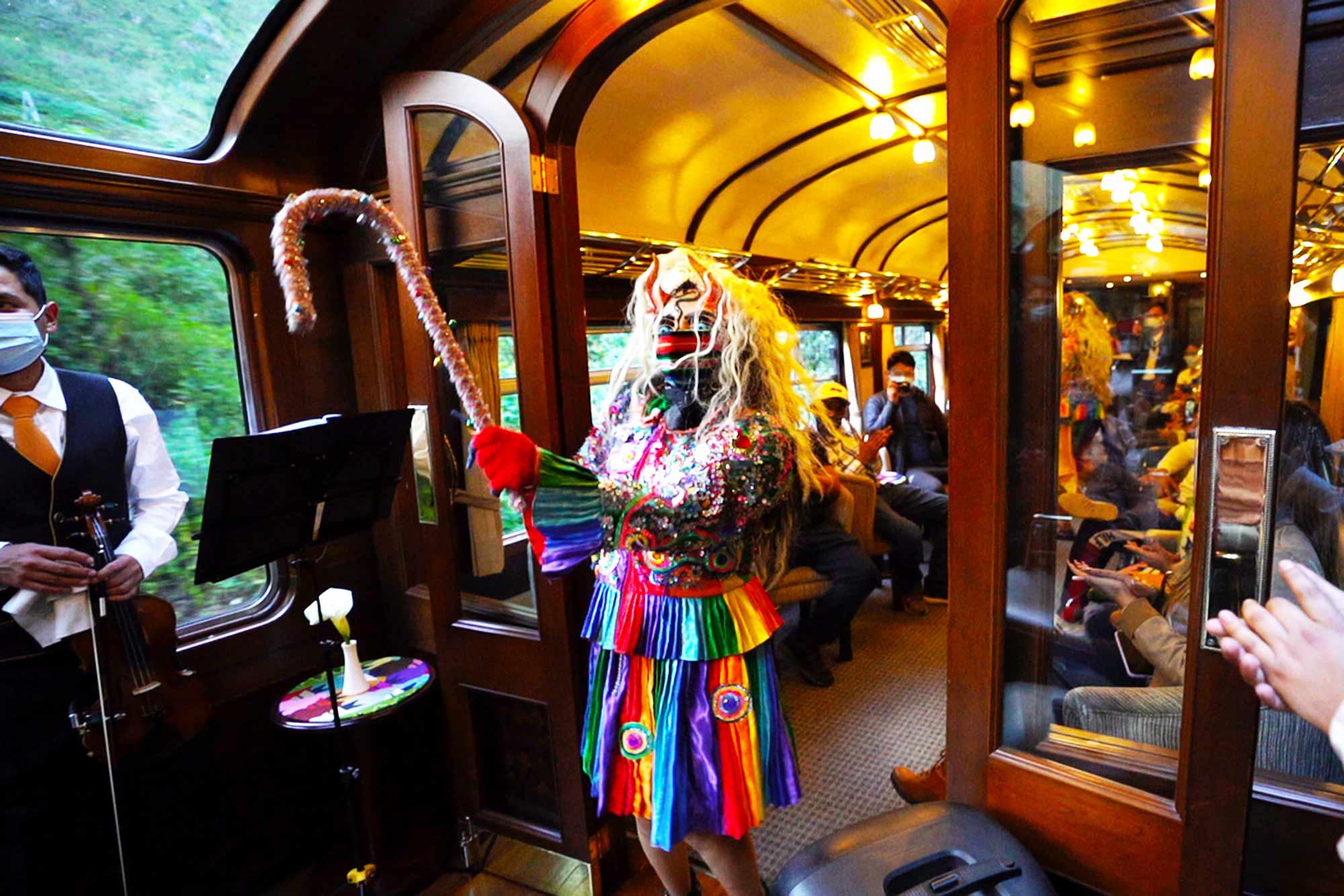
Journey to the legendary Inca citadel aboard a panoramic train with Andean entertainment and expert guidance
1 day
Journey to the ancient Inca citadel aboard a panoramic train, explore with an expert guide, and immerse yourself in Andean culture.
Travel from Cusco to Aguas Calientes by train
Shuttle from town to the entrance
Guided exploration of the stone structures
Train return journey to Cusco
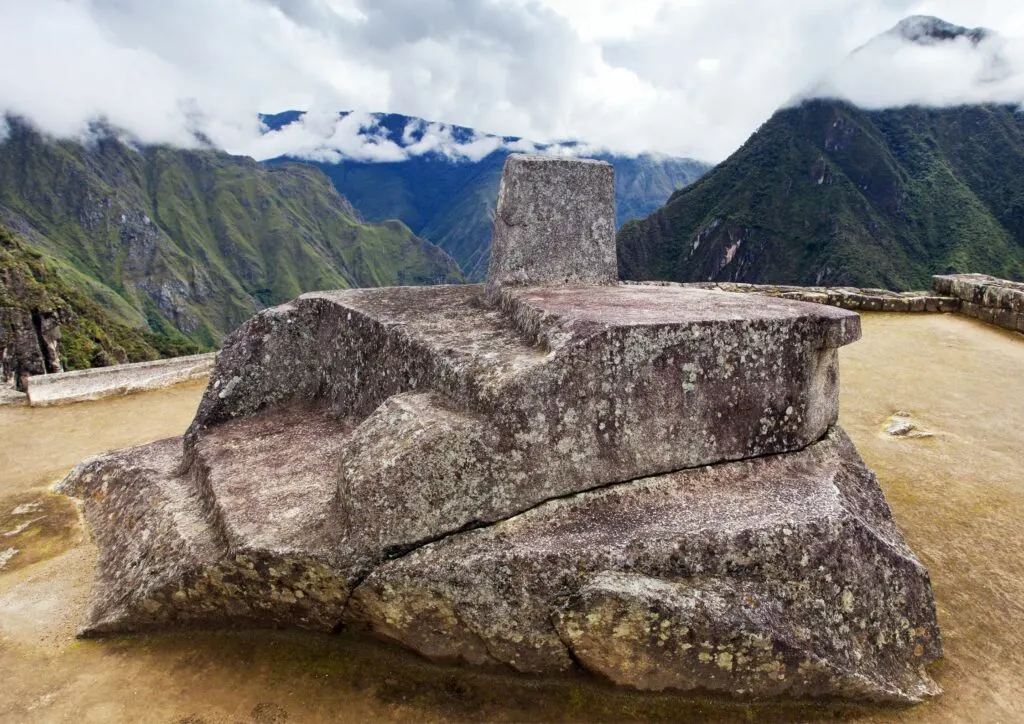
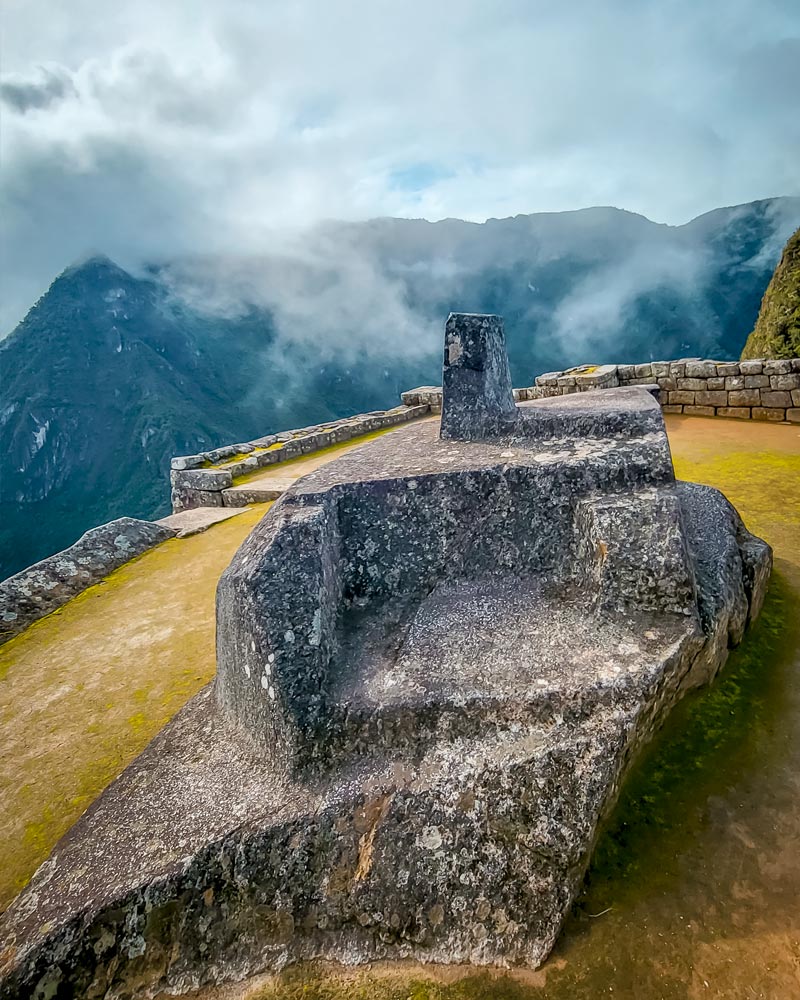
A ritual stone associated with the astronomical clock of the Inca, believed to hold the sun in place during winter solstice. It is carved directly from the natural bedrock of the peak.
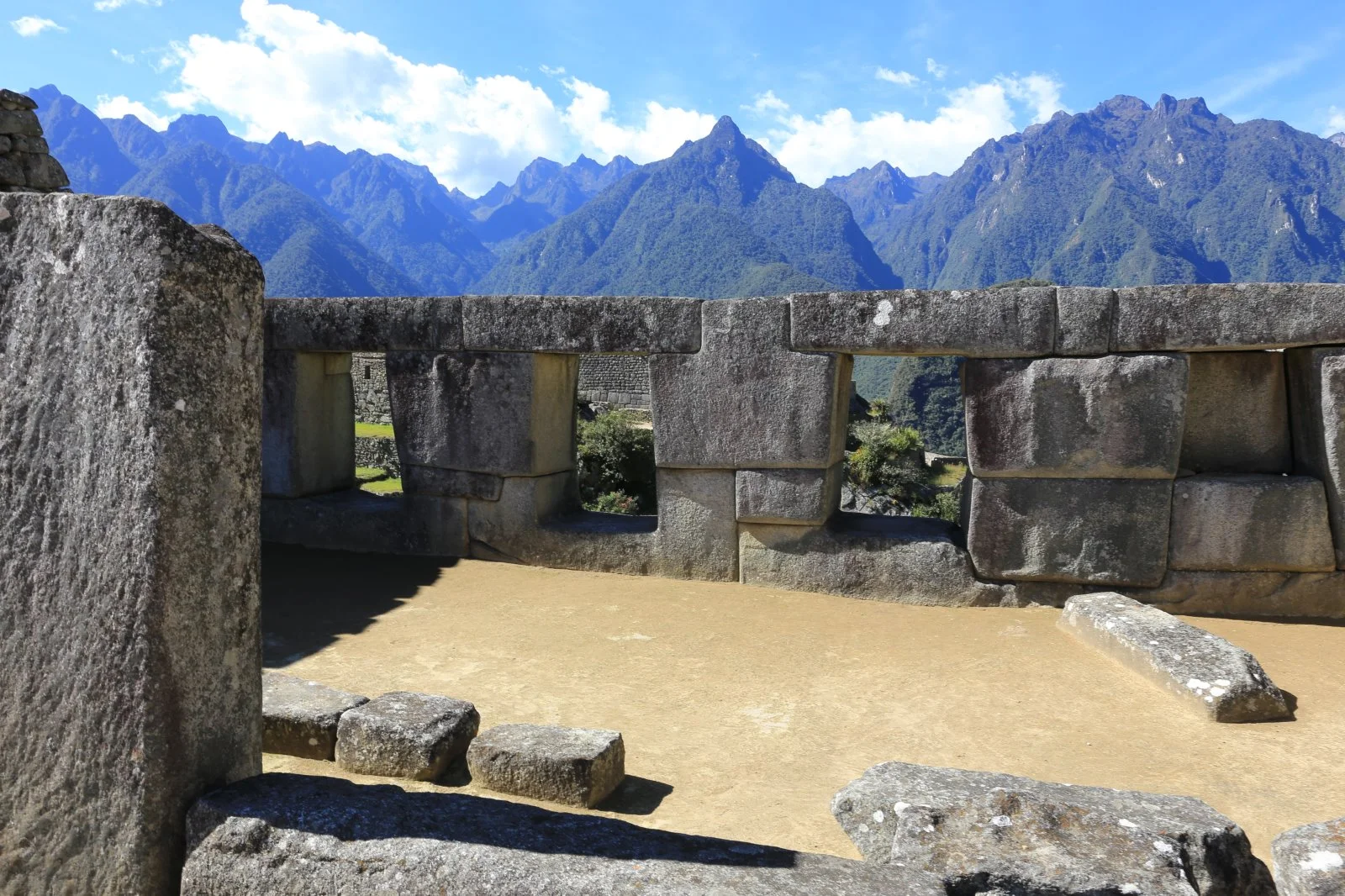
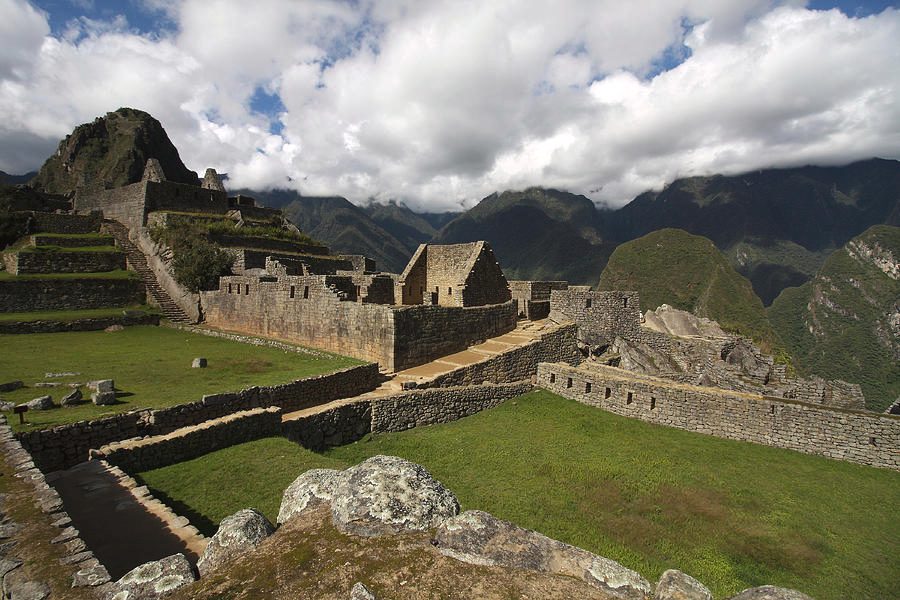
This structure features massive stone walls with three distinct trapezoidal openings overlooking the central plaza. It showcases the precision of Inca masonry without mortar.
Located on the edge of the Sacred Plaza, this site was dedicated to the highest Inca deities. It remains one of the largest structures within the urban sector.
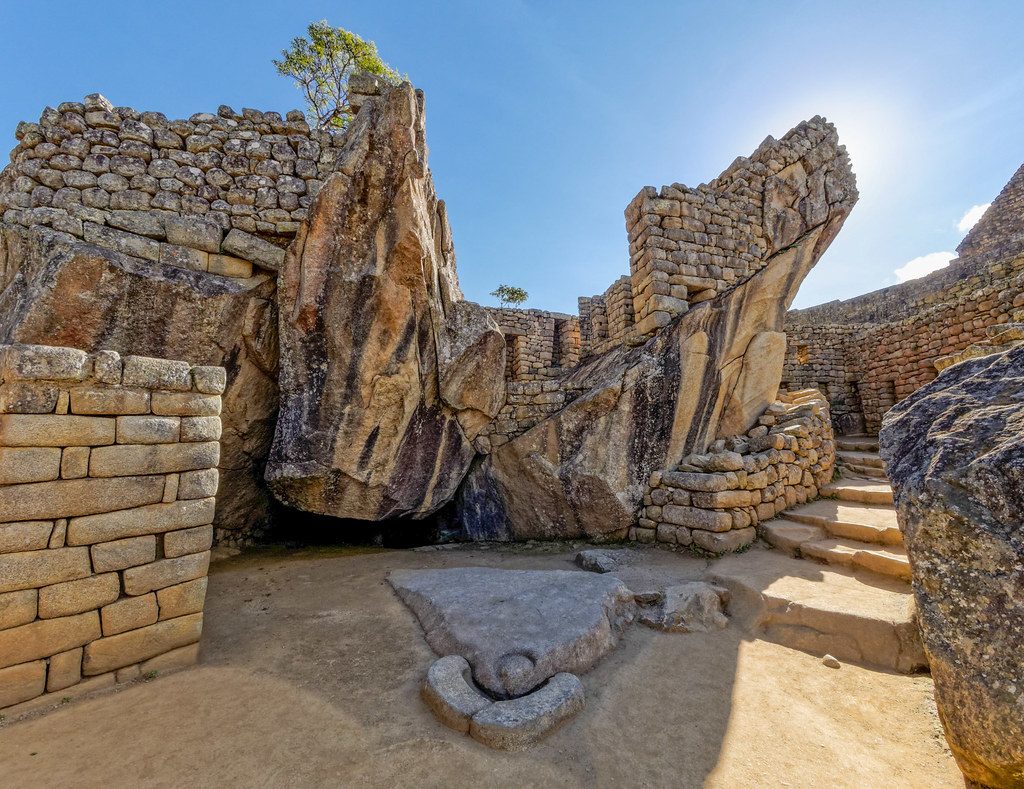
A natural rock formation shaped like the head of a condor, complemented by carved wings on the floor. It highlights the Inca connection to Andean wildlife.
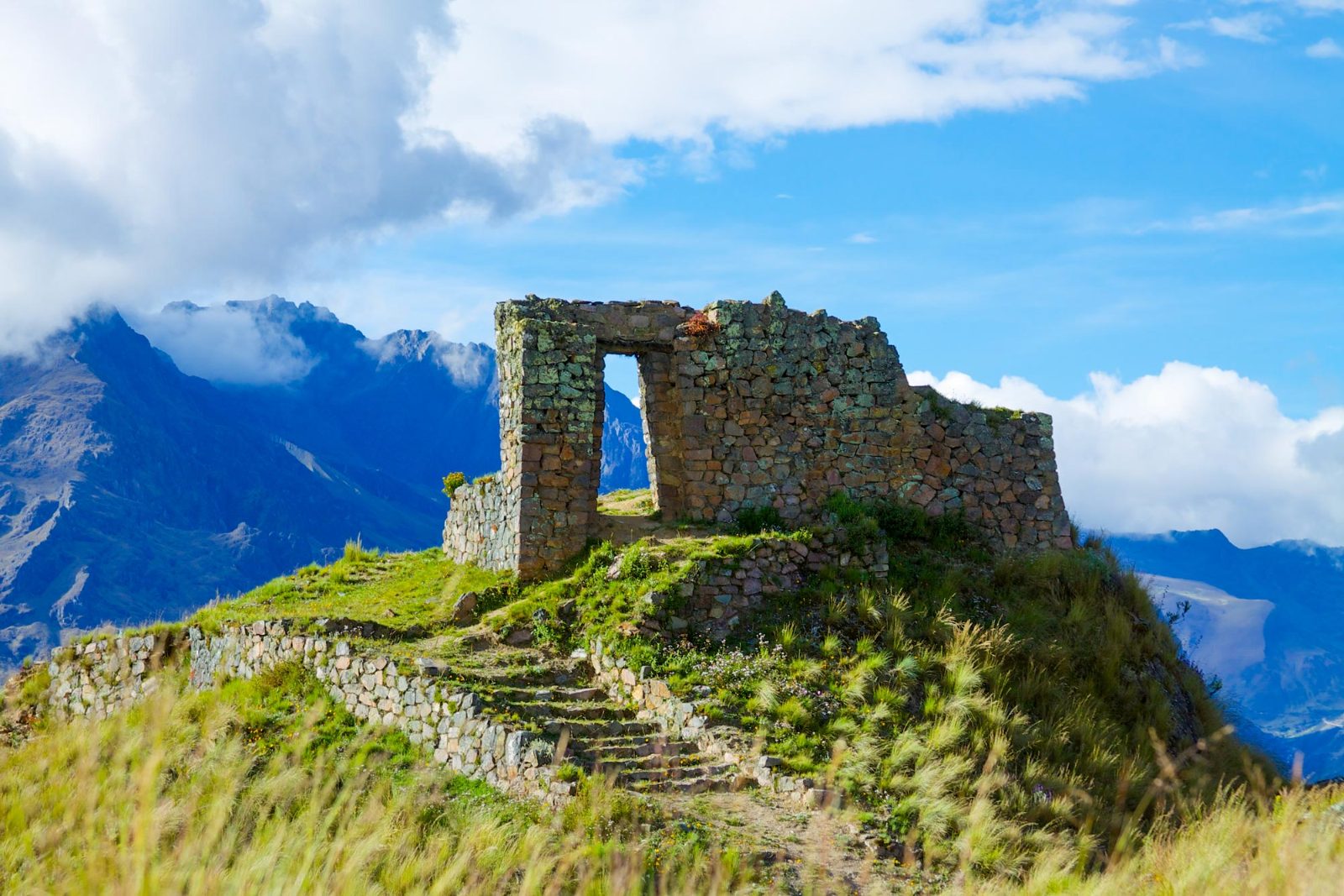
Known as the Sun Gate, this was the original entrance to the city via the Inca Trail. It provides a panoramic view of the entire sanctuary.
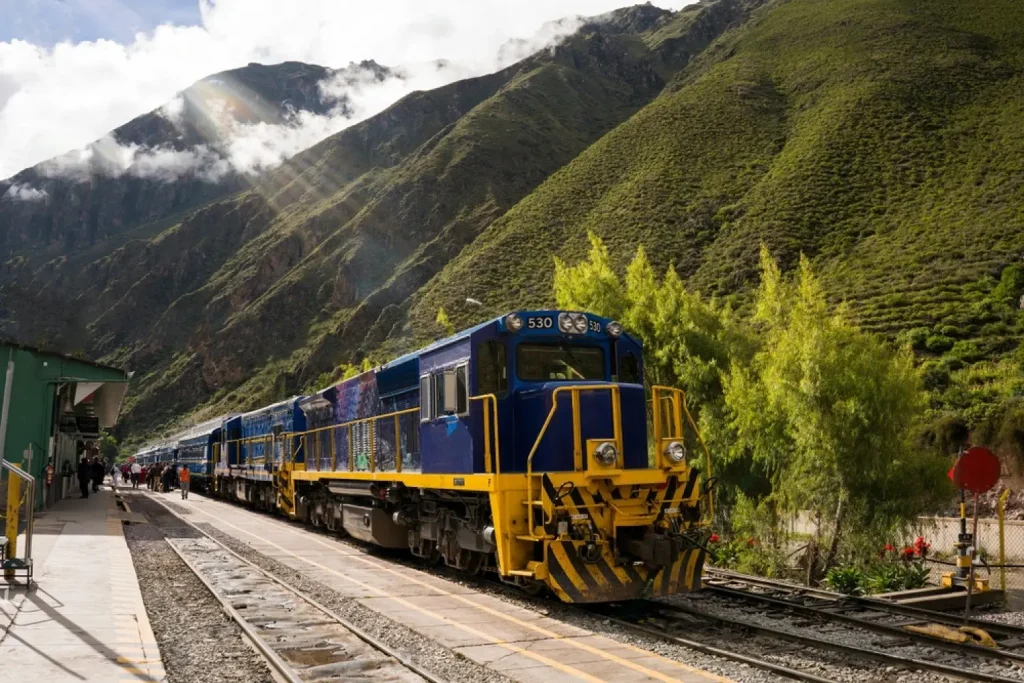
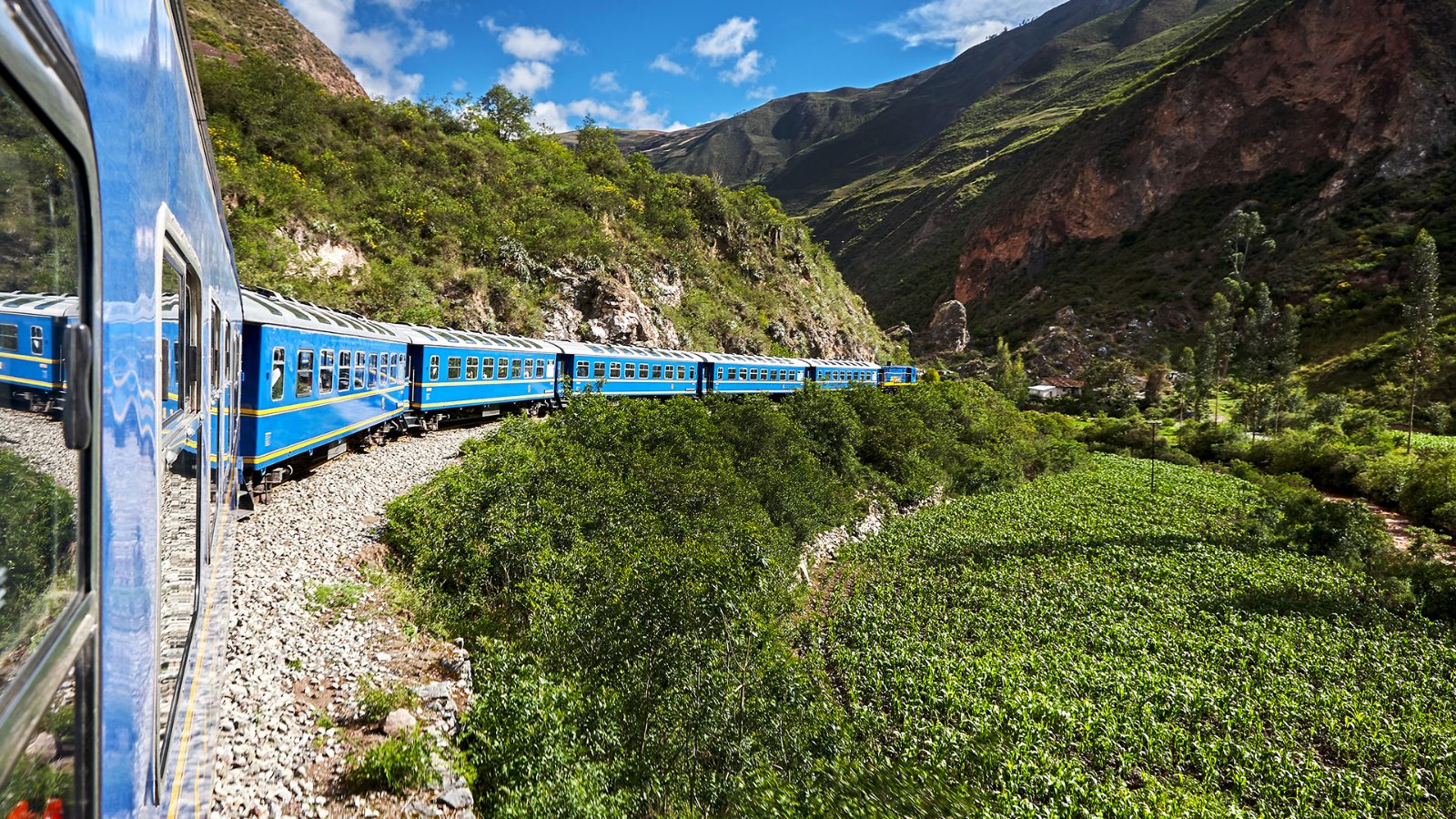
You board the train at Ollantaytambo before dawn, settling into panoramic windows as the carriage pulls away from the station. The Sacred Valley unfolds in dim blue light — terraced fields, whitewashed villages, the Urubamba River running fast and brown beside the tracks.
The canyon narrows as you climb, rock walls pressing close, cloud forest replacing cultivated slopes. Two hours later you step onto the platform at Aguas Calientes, where shuttle buses queue for the ascent.
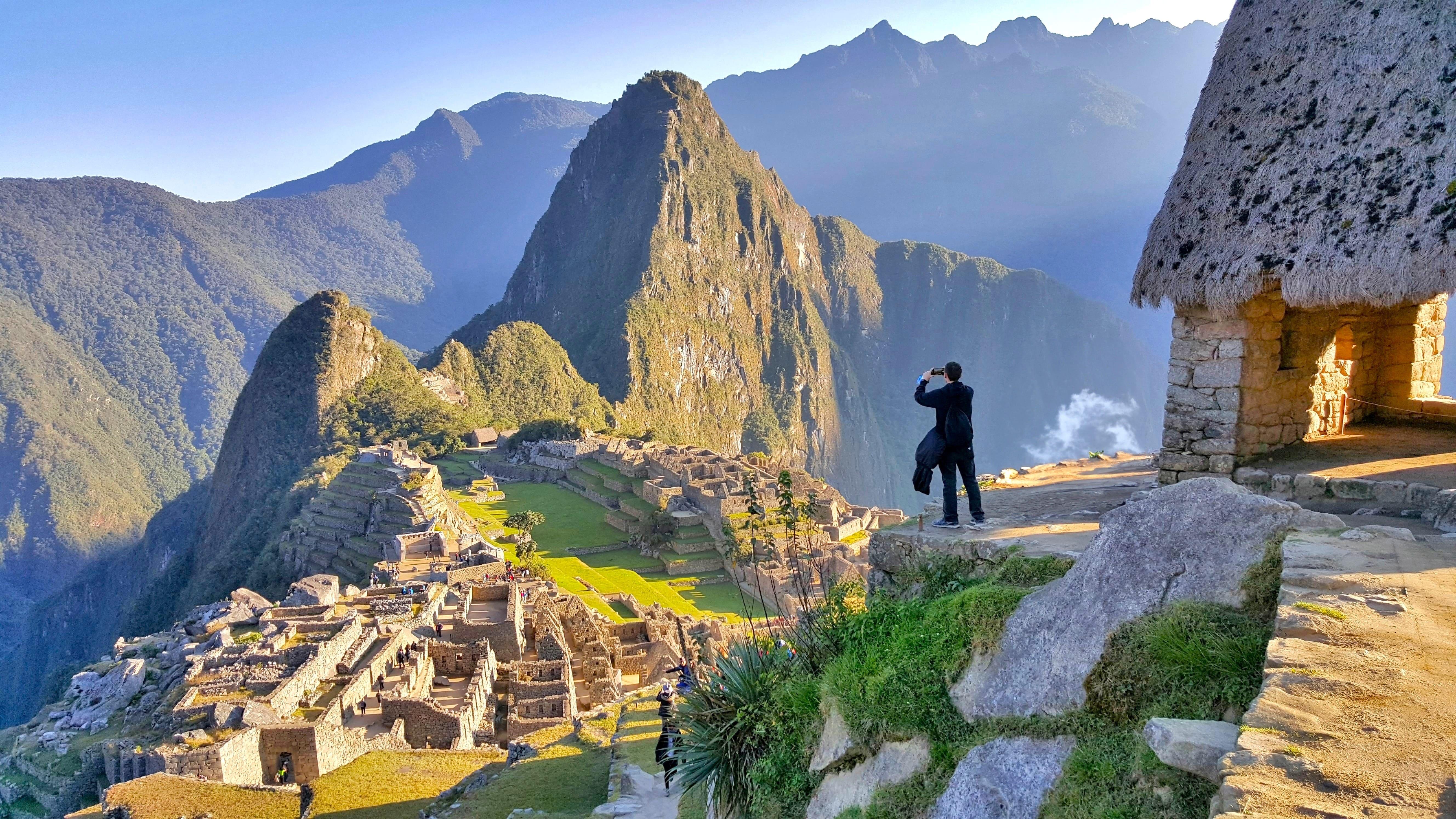
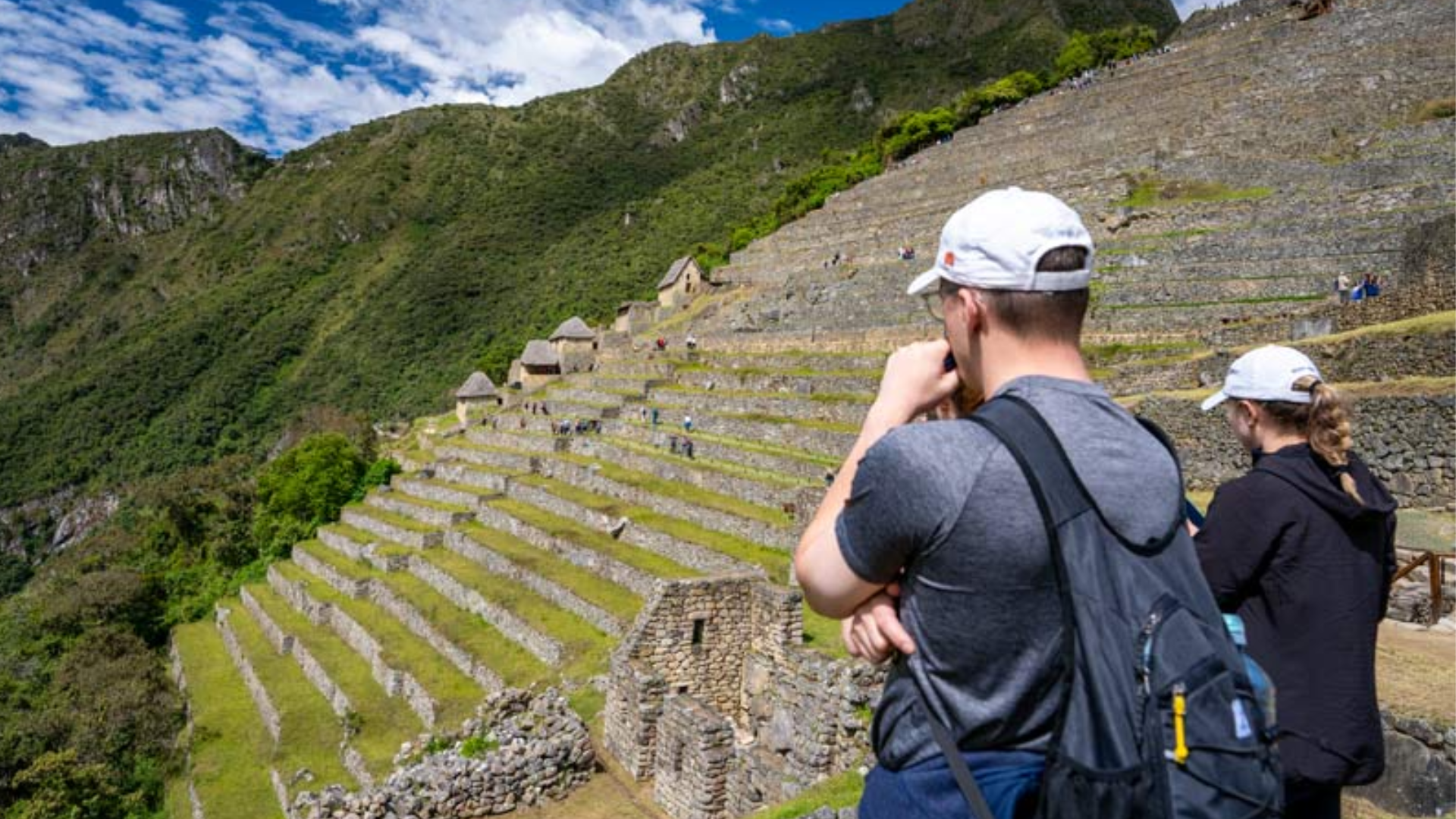
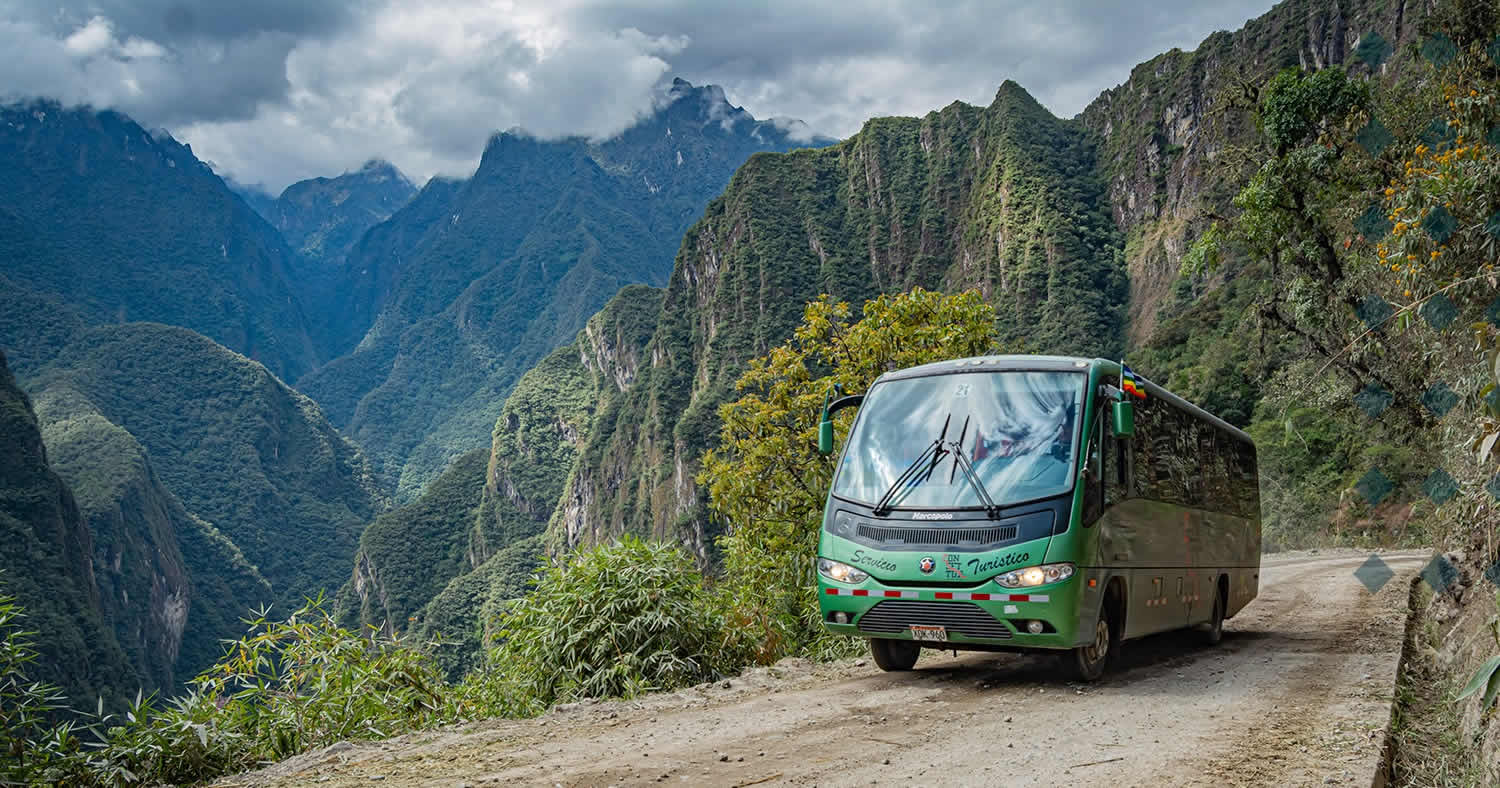
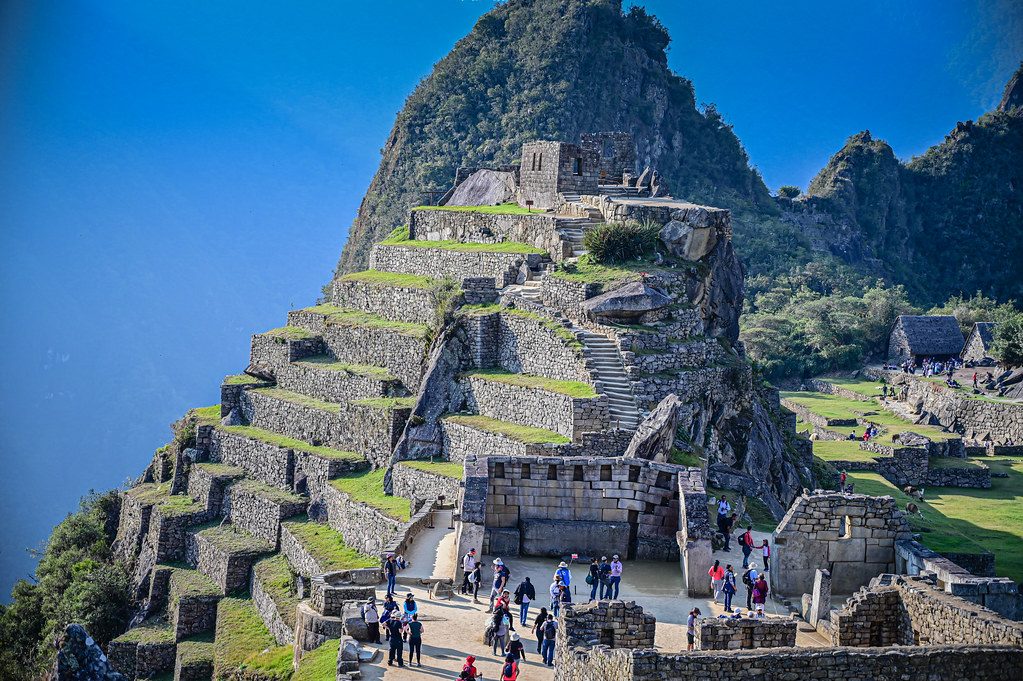
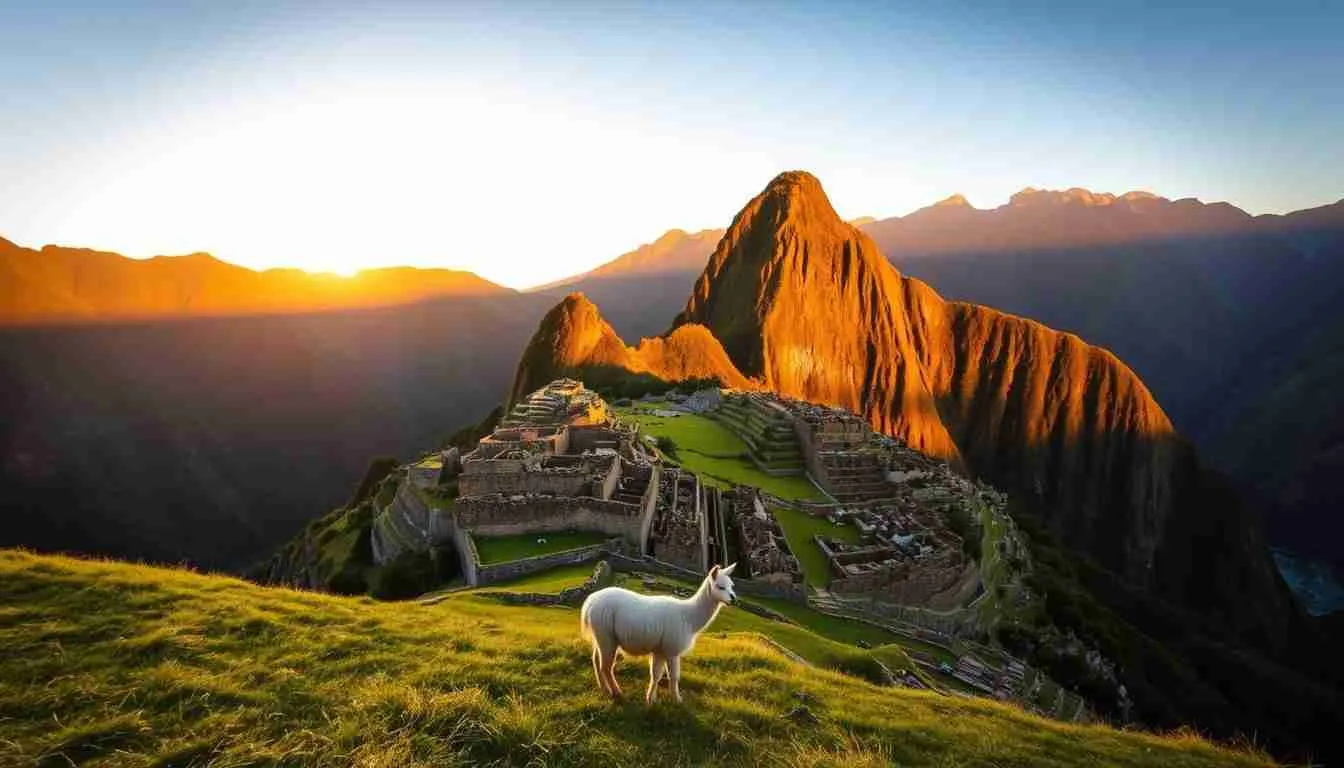
The switchback road winds through humid forest, each turn revealing deeper views of the gorge below. At the entrance you pass through turnstiles and follow stone paths upward, emerging onto the agricultural sector's upper terrace. The citadel spreads before you: granite walls rising from bedrock, trapezoidal doorways framing distant peaks, llamas grazing between temple foundations. You climb to the Intihuatana stone, pausing to trace its carved angles, then descend toward the Temple of the Sun. Morning light slants through its windows, illuminating interior niches.
Your guide recounts construction timelines, pointing to water channels still functioning after five centuries. You photograph the Room of the Three Windows, frame Huayna Picchu through a stone doorway, pause at viewpoints above the terraces. By midday you've walked the royal sector, the industrial quarter, the ceremonial plaza. You board the return train in early afternoon, valley light now sharp and golden, the citadel receding into cloud.
All the details about your upcoming adventure in one place
In 1911, Hiram Bingham arrived at a cloud-forest ridge 2,430 metres above sea level and documented stone terraces the Spanish conquistadors never found.
The Inca citadel of Machu Picchu, constructed circa 1450 under Pachacuti Inca Yupanqui, remained concealed for four centuries beneath Andean vegetation until Bingham's Yale expedition brought it to global attention. The site's ashlar masonry — stones cut so precisely no mortar was needed — has withstood seismic activity for more than five centuries, a testament to Inca engineering that modern architects still study.
Today Machu Picchu draws nearly 1.5 million visitors annually, yet its original purpose remains debated. Some scholars argue it served as a royal estate for Pachacuti; others propose it functioned as a sacred ceremonial centre aligned with astronomical events. The Intihuatana stone, a carved granite pillar at the site's highest point, was designed to track the sun's path during solstices, anchoring the Inca calendar. The Temple of the Sun features trapezoidal windows positioned to frame sunrise on the winter solstice, while the Room of the Three Windows overlooks the Urubamba Valley with geological precision. These alignments suggest the citadel was both residence and observatory, merging architecture with cosmology.
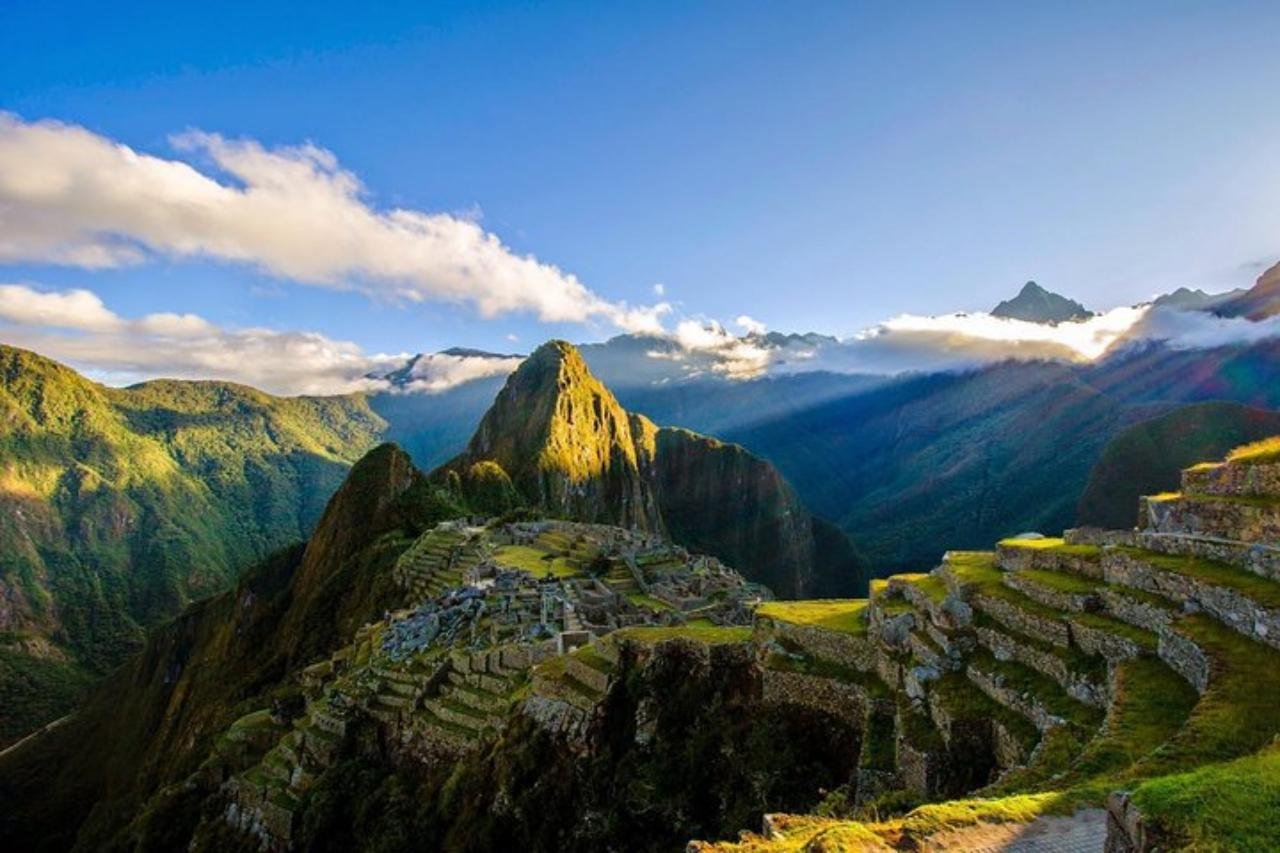
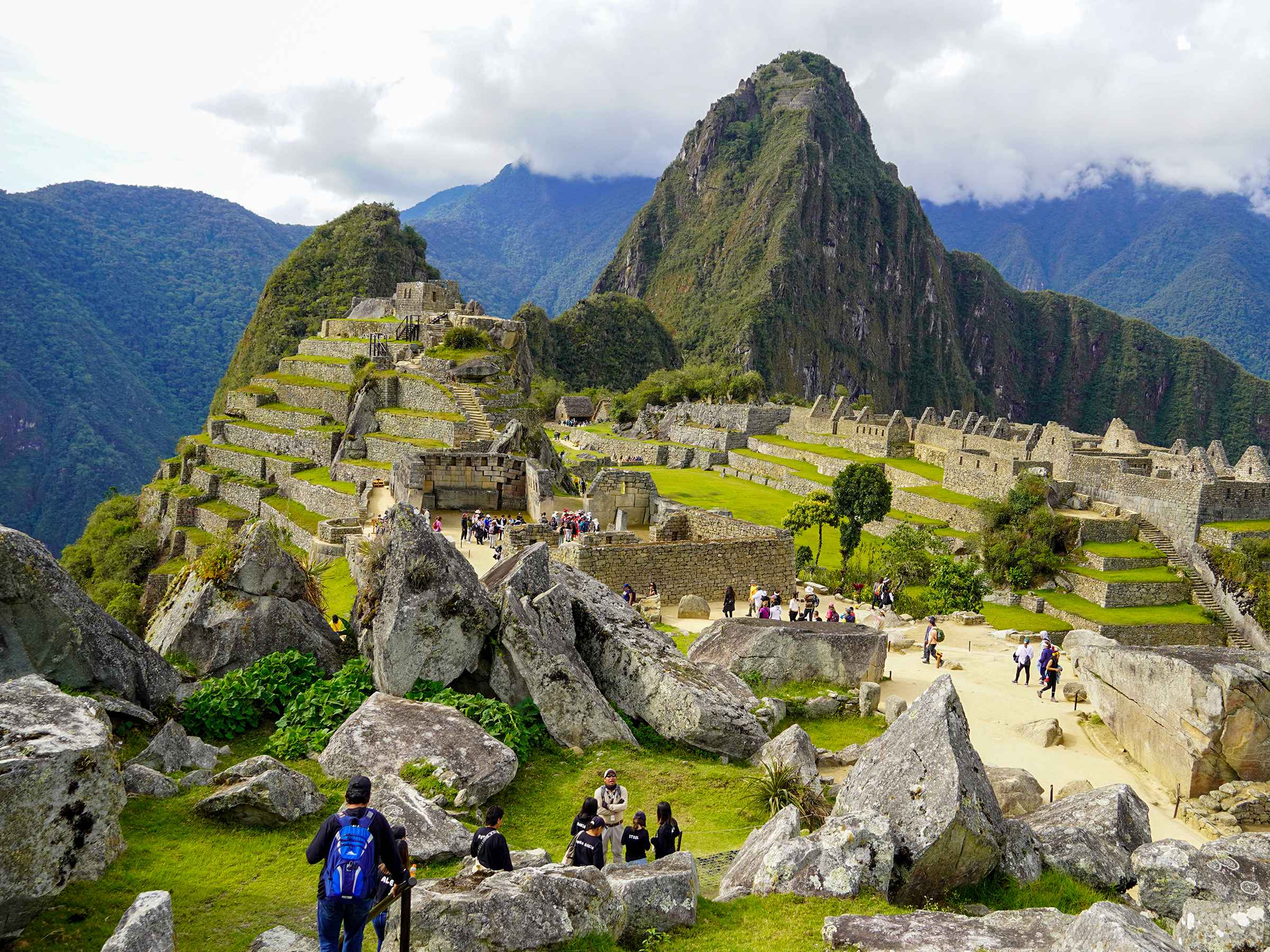
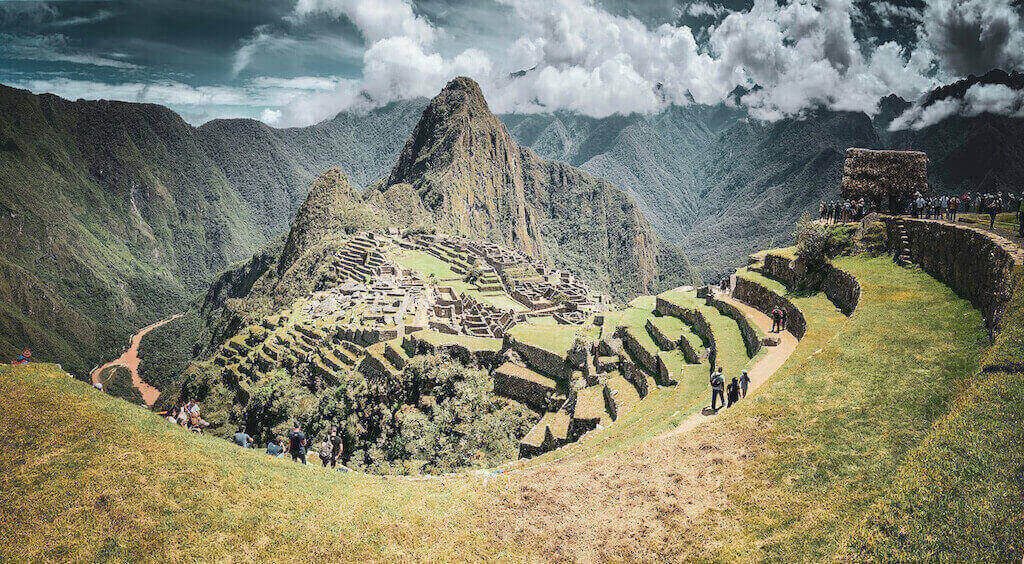
The site's location remains its most remarkable feature. Perched between two peaks — Machu Picchu (Old Mountain) and Huayna Picchu (Young Mountain) — the citadel sits within a narrow saddle surrounded by near-vertical drops. Agricultural terraces cascade down eastern slopes, engineered to prevent erosion and provide drainage in a region that receives two metres of rain annually. The Urubamba River, 400 metres below, carved the gorge over millennia, creating natural defences the Inca exploited. Access was limited to a single stone gateway, making the site nearly impregnable.
Reaching Machu Picchu requires either a four-day trek along the Inca Trail or a rail journey through the Sacred Valley. Most machu picchu day trip from cusco by train itineraries depart Ollantaytambo or Poroy station, following the Urubamba River northwest through narrowing canyon walls. The railway traces a route built in the 1930s to transport materials for early excavation work. Trains arrive at Aguas Calientes, the modern town at the mountain's base, from which visitors ascend by shuttle bus along a switchback road constructed in 1948. The citadel opens at 06:00 daily, and morning arrivals encounter fewer crowds while mist still clings to the surrounding peaks.
The site's ashlar masonry has withstood seismic activity for more than five centuries, a testament to Inca engineering that modern architects still study.
Wear comfortable walking shoes with good grip and layers for variable mountain weather. Avoid clothing with offensive slogans.
Only small backpacks under 20 liters are permitted inside. Larger bags must be left in lockers outside the entrance.
Handheld cameras and mobile phones are allowed for personal use. Tripods, monopods, and selfie sticks are strictly prohibited.
Children must be accompanied by an adult at all times. Strollers are not permitted on the paths due to the rugged stone construction.
The site features steep stone stairs and uneven terrain which pose challenges for those with limited mobility. Wheelchair access is not available throughout the sanctuary.
Eating inside the ruins is not allowed to preserve the site. Small water bottles are permitted, but please carry all waste out.
Opening Hours
06:00–17:30
Address
Aguas Calientes, Cusco Region, Peru
Accessibility
Limited terrain mobility
Best Arrival
06:00–16:00
Storage
Available at station entrance
Train · 3.5h · Variable
Depart from Cusco/Poroy station to Aguas Calientes. This is the primary route for a machu picchu day trip from cusco by train.
Bus · 30min · Standard
Take the official shuttle from Aguas Calientes town to the entrance. Buses depart every 15 minutes.
Entry tickets are non-refundable and fixed to specific dates. The 163 PEN conservation fee is included in the initial purchase price.
Recommended time
3-4 hours
A well-planned machu picchu day trip from cusco by train requires roughly four hours to navigate the designated one-way circuits that guide visitors through the citadel. While early arrivals minimize waiting at the bus queue in Aguas Calientes, the middle of the day often sees high density as train arrivals peak. Securing machu picchu day trip from cusco by train tickets in advance is essential to ensure your preferred entry window aligns with your transit schedule. Those seeking to explore the Llaqta thoroughly should prioritize the best arrival window of 06:00–16:00 to avoid congestion.
Crowd levels through the day
Weather · crowds · average price — dots go green to amber to red as each metric rises.
May to October offers clear skies and less rain for your machu picchu day trip from cusco by train. Temperatures remain mild during the day but nights can be cold.
November to April brings frequent showers. While the site is greener, trails can be slippery during this machu picchu day trip from cusco by train.
Drink plenty of water to manage altitude effects during your machu picchu day trip from cusco by train. Elevation in the region exceeds 2,400 meters.
Always carry your original passport for verification at the entrance. Digital copies are not accepted for entry.
The Llaqta of Machu Picchu rose between 1438 and 1472 under Pachacuti Inca Yupanqui, the ninth Sapa Inca who transformed a regional kingdom into the Tawantinsuyu empire. Engineers carved terraces into the ridge between Huayna Picchu and Machu Picchu mountains, stabilizing slopes prone to landslides with elaborate drainage systems that still function today. Granite blocks were shaped using bronze tools and river sand, then fitted without mortar in the ashlar technique that defines Inca architectural mastery. The estate served as a royal retreat and ceremonial center, its population never exceeding 750 residents who maintained agricultural terraces, temples, and residential zones across 80,000 acres of cloud forest. Spanish conquistadors never reached the citadel. When smallpox and civil war fractured the empire in the 1530s, the site was gradually abandoned. Locals in the Urubamba Valley knew of the ruins, but colonial records ignored them. Hiram Bingham arrived in 1911 leading a Yale expedition funded by the National Geographic Society. Guided by farmer Melchor Arteaga, Bingham documented structures buried under vegetation and extracted thousands of artifacts—a removal that sparked a repatriation dispute lasting until 2011, when Yale returned ceramics and skeletal remains to Peru. Archaeological work intensified after 1934 when the Peruvian government restricted excavation licenses. Luis E. Valcárcel led systematic studies that identified the Intihuatana stone as an astronomical marker and traced water channels supplying sixteen ritual fountains. Modern machu picchu day trip from cusco by train tours follow the rail corridor inaugurated in 1948, replacing mule paths that limited access for decades. UNESCO designated the sanctuary a World Heritage Site in 1983, citing its fusion of architecture and landscape. Conservation efforts now balance tourism infrastructure with structural preservation, monitoring erosion on terraces that have supported the site for over five centuries.
Pachacuti Inca Yupanqui commissions construction of the royal estate on a mountain ridge above the Urubamba River.
Smallpox epidemic and Spanish conquest trigger gradual abandonment of the citadel, which escapes colonial destruction.
Hiram Bingham documents the overgrown ruins for Yale and National Geographic, beginning a century of archaeological study.
Rail service opens between Cusco and Aguas Calientes, transforming access for researchers and early machu picchu day trip from cusco by train visitors.
UNESCO inscribes Machu Picchu as a World Heritage Site, recognizing its cultural and natural significance.
Yale University repatriates excavated artifacts to Peru, resolving a century-long dispute over collection ownership.
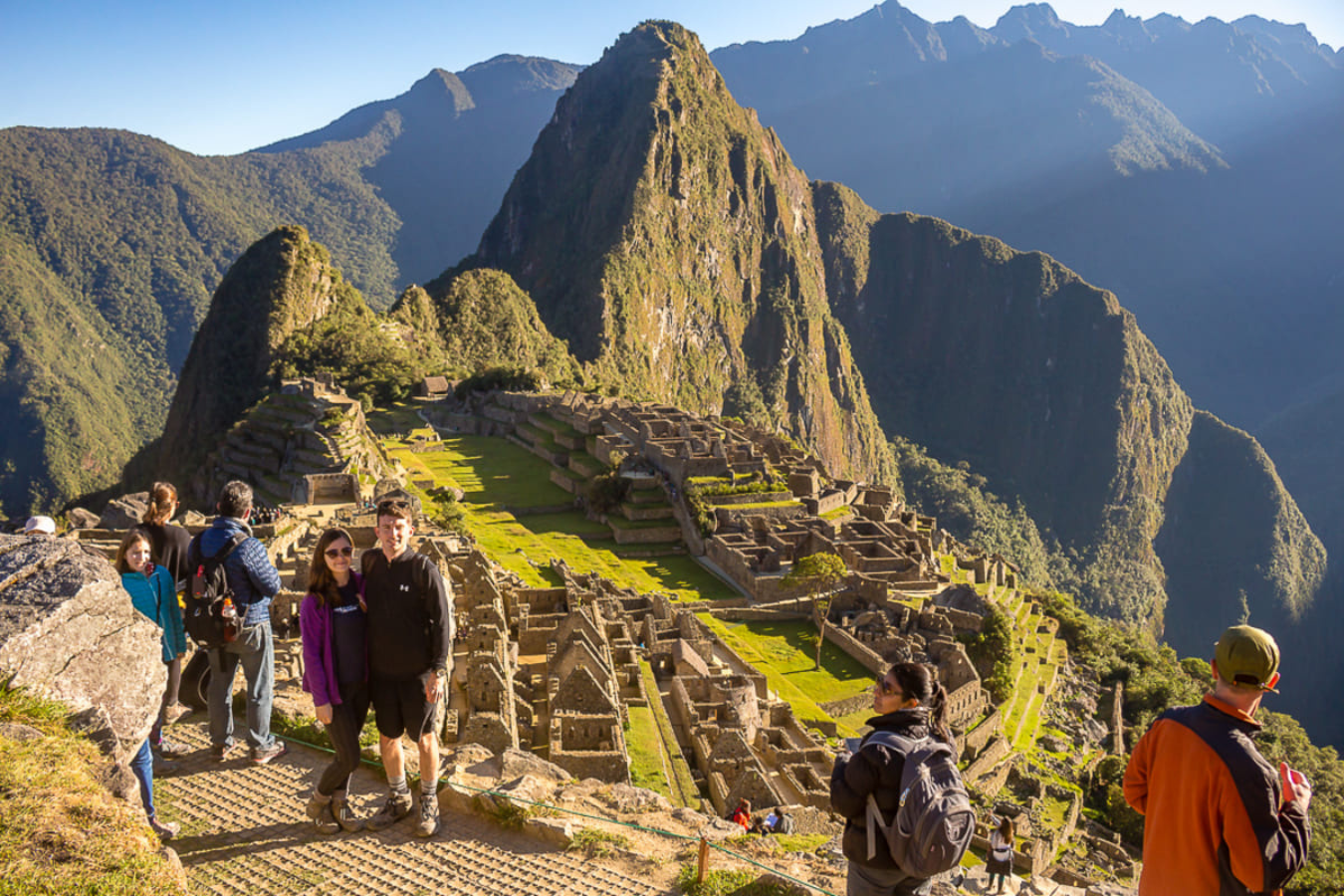
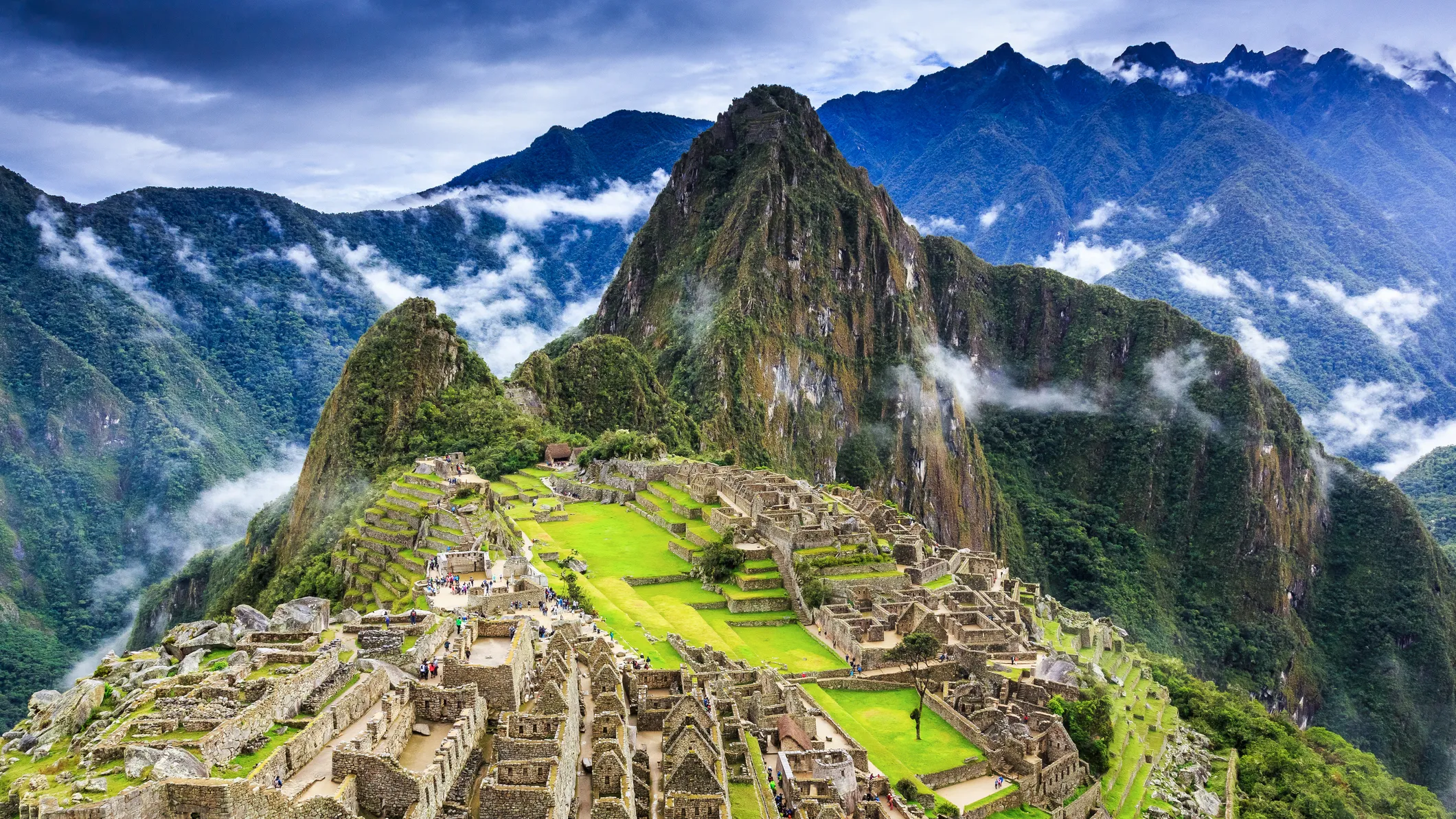
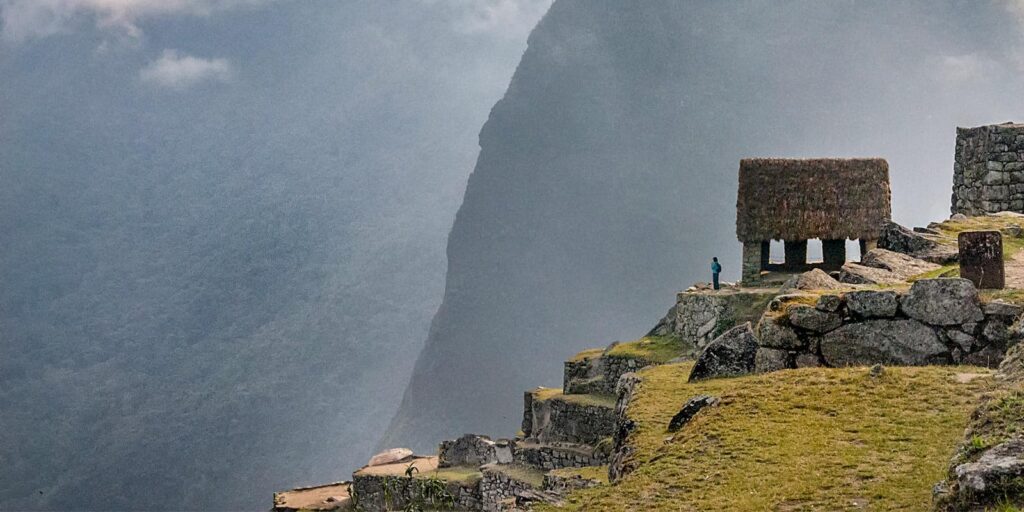
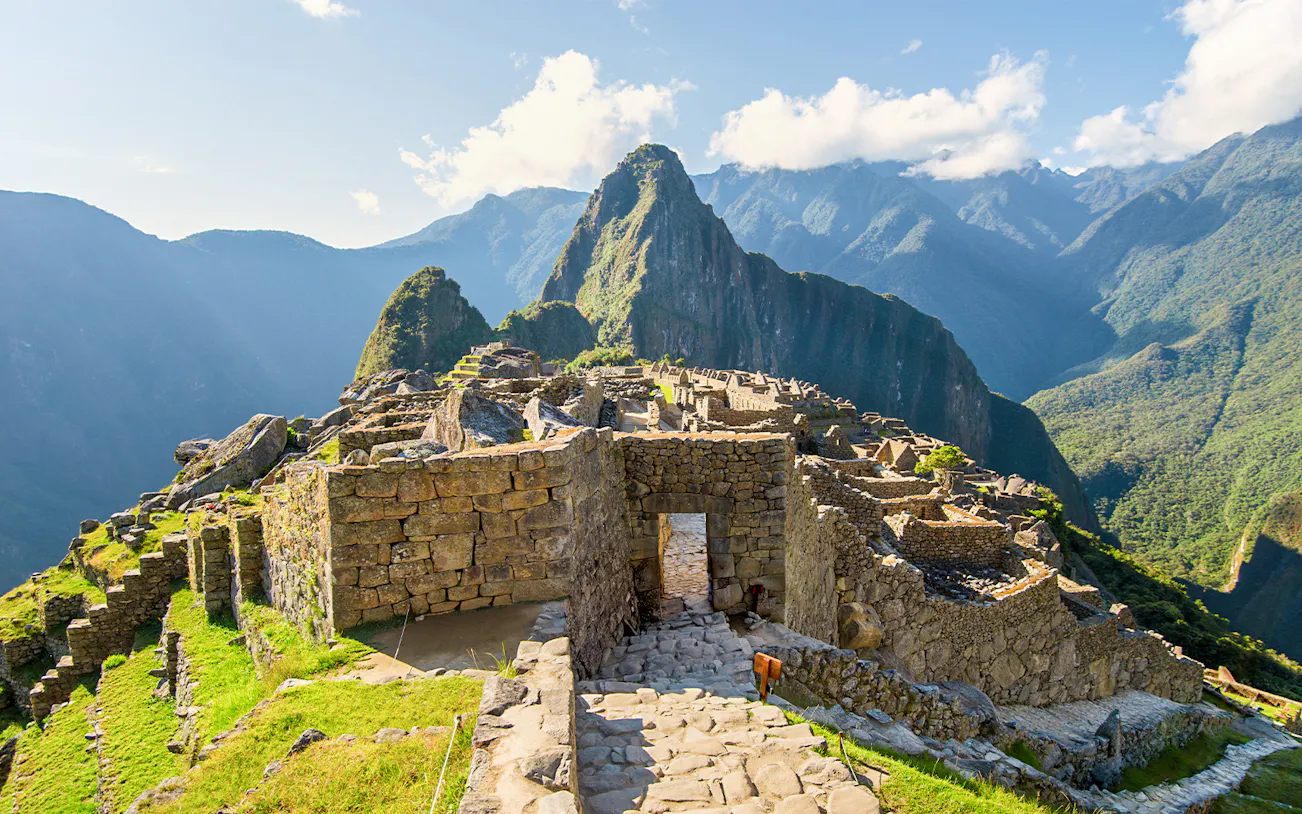
This structure offers the classic elevated perspective of the citadel with Huayna Picchu in the background. Stand near the stone wall for the quintessential wide-angle composition of the archaeological site.
Located near the entry point, this vantage provides a clear line of sight across the urban sector and ceremonial plazas. It is the ideal place to capture the scale of this UNESCO heritage site during your machu picchu day trip from cusco by train.
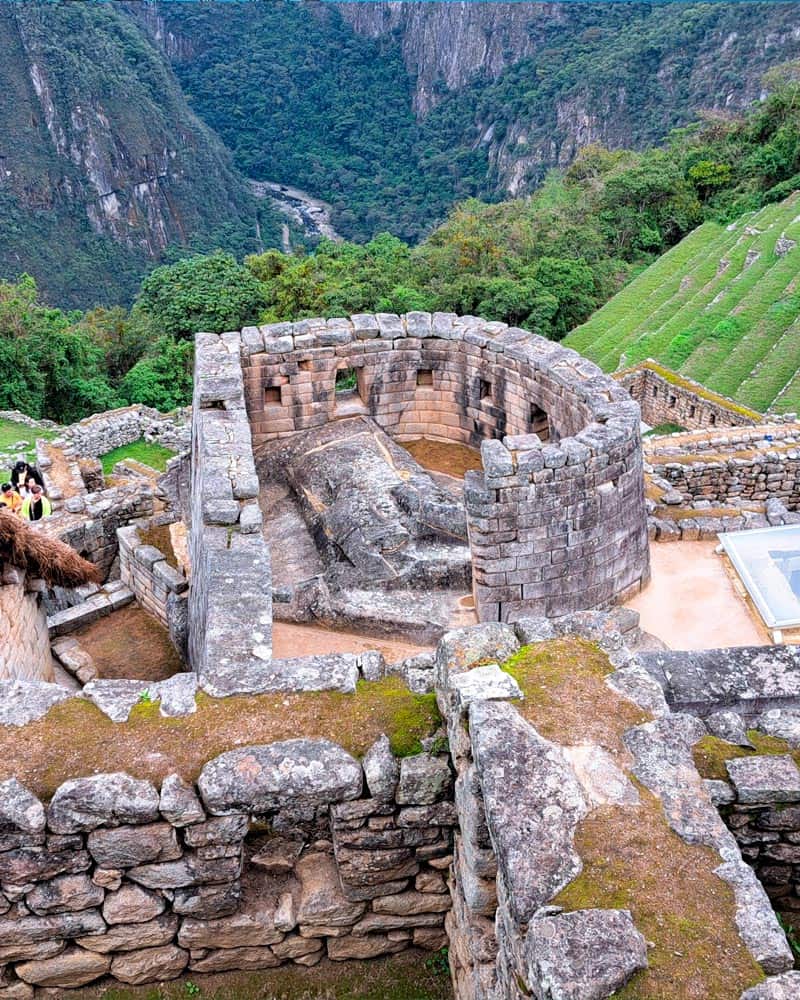
Focus on the curved stone masonry and the precise fit of the granite blocks that characterize this significant religious structure. Access is strictly controlled, so prioritize this location as you navigate the inner complex of the llaqta.
This ritual stone provides a unique vertical perspective of the central plaza surrounded by deep mountain valleys. Visitors often utilize machu picchu day trip from cusco by train tours to reach this high point early to minimize visual obstruction from other travelers.
Position yourself at the grassy base of the residential area to frame the surrounding peaks through the stone doorways. This ground-level perspective emphasizes the architectural harmony between the Inca ruins and the natural landscape captured during your machu picchu day trip from cusco by train ticket experience.
Planning a machu picchu day trip from cusco by train requires careful coordination to manage high-altitude travel with children. Utilizing efficient rail transport allows families to focus on exploring this historic UNESCO World Heritage site with minimal transit fatigue.
Strollers are not permitted within the sanctuary due to uneven stone paths and steep staircases, so parents should bring a high-quality child carrier. Infants and toddlers must be carried throughout the visit to navigate the rugged terrain safely.
There are no baby-change facilities or public restrooms located inside the citadel walls, so plan accordingly before entering. Secure your machu picchu day trip from cusco by train tickets well in advance, as capacity is strictly limited.
The site involves significant incline changes that can be taxing for younger legs, making private machu picchu day trip from cusco by train tours a better option for setting your own tempo. Frequent breaks are recommended to help children acclimate to the altitude while exploring these ancient Cusco landmarks.
Pack sufficient snacks and water for your group, as there are no food vendors available once you pass the entrance. Choosing a machu picchu day trip from cusco by train tour often includes helpful logistics support for meal planning during your transit.
Dining options are extremely limited at the sanctuary entrance, so most visitors on a machu picchu day trip from cusco by train find better variety down in Aguas Calientes. Before embarking on your Andean citadel tour, consider that the official site is located in Aguas Calientes, Cusco Region, Peru, where numerous cafes cater to travelers.
Located right at the entrance, this is the only option for those wanting to avoid the shuttle trip down during their machu picchu day trip from cusco by train tours. It offers high-end buffet service that is convenient but often busy during the 06:00–16:00 arrival window.;Café Inkaterra
Everything you need to know for your journey
The site is open daily from 06:00–17:30.
Yes, booking machu picchu day trip from cusco by train tickets early is essential as daily quotas are strictly enforced.
The standard adult entry fee is 163 PEN.
Small bags under 20 liters are allowed, but larger luggage must be stored at the station.
Photography for personal use is permitted, but professional equipment like tripods is prohibited.
The best arrival window is 06:00–16:00 to avoid midday crowds.
Eating is not allowed inside, so bring snacks to consume before entering.
You will take a train from Cusco to Aguas Calientes followed by a bus transfer.
Yes, children are welcome but must be supervised at all times due to the site's layout.
A scenic hike through the cloud forest leading to a cascading waterfall. Located near the railway tracks.
The only hotel located at the entrance gate.
Eco-friendly boutique hotel in Aguas Calientes.
Area containing various hostels and lodges near the station.
Join thousands of happy travelers who have discovered this incredible experience
Book Your Experience Now